
Learn more about the HIDSS4Health Steering Committee and its members.
Steering Committee
The Steering Committee (SC) oversees daily operations and drives the strategic development of initiatives proposed to the General Assembly (GA). Each SC member is responsible for a specific area, such as finance, the selection process, equal opportunities, meeting organization, or public engagement. The SC convenes at least once every three months, and decisions are made by an absolute majority.
Spokespersons

Klaus Maier-Hein
DKFZ
Contact
The Maier-Hein team develops machine learning algorithms, mathematical modelling approaches for computational image understanding and large-scale information processing.
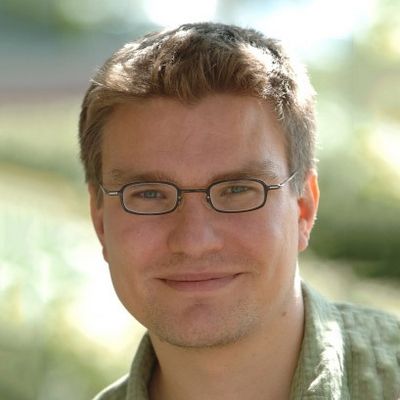
Carsten Rother
UNI HD
Contact
Carsten Rother received his diploma degree with distinction in 1999 from the University of Karlsruhe/Germany, and his PhD degree in 2003 from the Royal Institute of Technology (KTH) Stockholm/Sweden. From 2003 until 2013 he was researcher in the Computer Vision Group at Microsoft Research Cambridge/UK, lead by Andrew Blake. From 2014 until 2017 he was full Professor at TU Dresden/Germany. Since 2017 he is full Professor at Uni Heidelberg/Germany, heading the Computer Vision and Learning Lab. He is also coordinating director of the Heidelberg Collaboratory for Image Processing (HCI) and an AI consultant for companies. In the last years, two start-ups emerged from his lab https://rabbitai.de/ and https://www.copresence.tech/. His research interests are in the field of computer vision and machine learning, including related fields such as human-computer interaction and computational imaging.
Katja Mombaur
KIT
Contacts
The BioRobotics Lab is part of the Institute for Anthopomatics and Robotics (IAR) at KIT and led by Prof. Katja Mombaur. It has been created in May 2023 as an endowed Chair of the Hector foundation. Through the Canada Excellence Research Chair in Human Centred Robotics and Machine Intelligence of Katja Mombaur, there is a close collaboration with our team at the University of Waterloo, Canada - HCRMI.
Elected Members

Sabine Jung-Klawitter
UNI HD
Contact
We are interested in inborn errors of metabolism with a special focus on defects in neurotransmitter biosynthesis and metabolism including defects in the biosynthesis of dopamine, serotonin, and GABA, as well as in tetrahydrobiopterin (BH4) biosynthesis. We use patient-specific induced pluripotent stem cells (iPSCs), CRISPR-generated isogenic control iPSC lines and differentiated somatic cell types (neurons, glia) and organoids to elucidate the pathophysiology of the diseases. We are especially interested in (a) gaining a deeper understanding of the complex pathophysiology of the diseases, (b) obtaining better genotype/phenotype correlations and (c) the identification of new therapeutic targets and diagnostic markers.
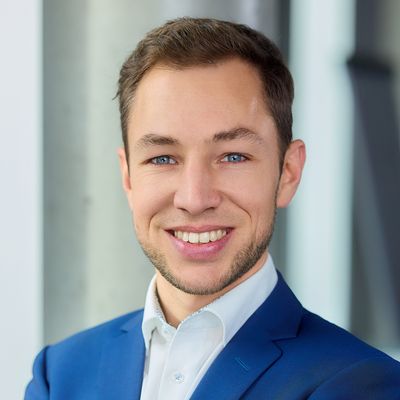
Thomas Gerhardy
KIT
Contact
Institute for Anthropomatics and Robotics
Thomas Gerhardy studied sports science at the German Sports university Cologne and university of Heidelberg. After a position as research consultant at a spin-off company, he completed his doctorate at the university of Heidelberg. His research expertise lies at the intersection of sports science and psychology, with a focus on innovative approaches to studying human movement and behavior.
After his defense, he was working at the Institute of Computer Engineering at the University of Heidelberg. On his project he focused on mobility in older adults to improve assistive devices for older adults. Since March 2025 he has been co-leading the graduate school HIDSS4Health for KIT related concerns.

Gabriela Ciolacu
KIT
Contact
Optimizing Resource Planning in Surgical Wards Through Data-Driven Resilience
Institution: KIT
Data science PI: Prof. Dr. Emilia Grass
Life science PI: Dr. Sabine Jung-Klawitter
Daily resource management in surgical wards is complex due to the uncertain nature of surgeries, patient complications, high associated costs, and the need for specialized supplies and workforce. The complex resource planning and management task can be further exacerbated by unforeseeable events such as adverse events. Adverse events can be natural hazards or man-made disasters.
Mismanaging a surgical ward's resources during adverse events can lead not only to financial losses but also to non-financial losses such as higher casualty rates and personnel burnout. To minimize such losses, a hospital needs to improve its operational resilience before, during, and after adverse events.
In this project, we propose a data-driven resilient optimization framework to assist hospital decision-makers in managing and planning the surgical ward’s resources to withstand such adverse events. By optimizing resource use in advance or immediately after the event, resilient surgical wards could improve the quality and speed of urgent patient care, limit direct and indirect casualties, and decrease mortality.


Scientific Partners: