Project overview
ID01
Statistical Methods for Infectious Disease Outbreak Detection in a Post-Pandemic World
Supervisor: Prof. Dr. Melanie Schienle (KIT) / J.-Prof. Dr. Johannes Bracher (KIT)
ID02
Patient-Specific Physics-Based Virtual Twin for Neurosurgical Simulation Using FEM and Data-Driven Multi-Tissue Modeling
Supervisor: Prof. Dr. Maria Francesca Spadea (KIT) / Prof. Dr. Uwe Spetzger (KIT)
ID03
Agentic, covariate-aware multi-omics factor analysis for causal biomarker discovery
Supervisor: Prof. Dr. Oliver Stegle (DKFZ) / Dr. Junyan Lu (University Hospital Heidelberg)
ID04
Large-Scale Foundation Models for 3D Radiology
Supervisor: Prof. Dr. Klaus Maier-Hein (DKFZ) / Dr. Hannes Kenngott (University Hospital Heidelberg)
ID05
Personalized Modeling and Multimodal Sensing for Imminent Fall Prediction in Geriatric Patients
Supervisor: Prof. Dr. Katja Mombaur (KIT) / PD Dr. Carl-Philipp Jansen (University Hospital Heidelberg)
ID06
Prediction of hypoxia-associated peptides from hematoxylin and eosin histological images
Supervisor: Prof. Dr. Benedikt Brors (DKFZ) / Dr. Ina Kurth (DKFZ)
The annual recruitment of doctoral researchers has concluded.
Our next recruitment cycle will begin in summer 2025. Until then, we are unable to consider unsolicited applications. Thank you for your understanding.

Funding
All positions are fully-funded (e.g. “E13” TVöD or TV-L positions under applicable regulations of the participating institutions) according to the public sector salary system at German universities and research centers. It means a yearly gross income of more than 55.000 € and results in more than 35.000 € net income after taxes, own contributions to health insurance, pension insurance, unemployment insurance etc.
Weekly working times are 39.5 hrs, the contract includes 30 paid leave days. However, since the German system is quite complicated, all financial details cannot be provided here but can be calculated here (sorry, only available in German).
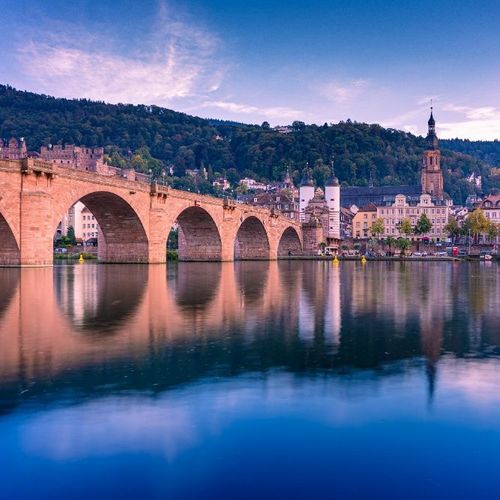
Heidelberg and Karlsruhe are attractive cities located in the sunny south-western part of Germany within a traveling distance of around 50 kilometers. They are connected via a dense public transport network. More information on living costs can be found in
- the information pages of the German Academic Exchange Service (DAAD)
- or in a PDF booklet from the German Federal Ministry for Education and Research

Diversity and Equal Opportunities
The provision of equal opportunities and diversity is a central concern of KIT, DKFZ and Heidelberg University. We are committed to enabling researchers to balance the demands of career and family life and therefore offer various options to staff, such as flexible working time models, family-friendly meeting times, re-entry after maternity leave, comprehensive childcare concepts, provision of Tele-offices, and in-house childcare facilities. Funded places in local childcare facilities offer full-time and part-time child-care (for example during a conference or summer school).
The networks of female scientists at the partners – “WiKIT” at the KIT and the Executive Women’s Initiative at the DKFZ – are professional networks of female scientists in leading positions. These networks are platforms of mutual exchange and aim at fostering networking among female scientists of various disciplines to improve the career perspectives and working conditions of female scientists in Germany.
All measures promoting the compatibility of career and family life are monitored and advanced by the “familiengerechte Hochschule” (family-friendly university) audit and “Audit Beruf und Familie” (Career and Family Audit) at the KIT, Heidelberg University and DKFZ, respectively.

How to Become an Associated Doctoral Researcher
How to Become an Associated Doctoral Researcher
How to Become an Associated Doctoral Researcher
Requirements
- Doctoral researcher works at KIT, DKFZ or Heidelberg University and is not directly funded by the school.
- Doctoral thesis is planned in an informatics-related faculty (Faculty for Mathematics and Computer Science (Heidelberg University), Faculty for Informatics/Mathematics/Mechanical Engineering/Economics and Management (KIT)).
- The first supervisor must come from the field of data science while the second supervisor must come from the life science field. Both preferably should be involved in the HIDSS4Health school.
- A Thesis Advisory Committee (TAC) consisting of at least three members. The responsible data science PI and the responsible life science PI must be involved in the HIDSS4Health school.
- At least one of the TAC members should come from Karlsruhe and at least one should come from Heidelberg.
- Admission to doctoral studies at the faculty at KIT or Heidelberg University has already been confirmed or at least initiated.
- Funding secured over a period of at least three years.
- Projects need to have the same basic conditions as the other projects in the school:
- Topic is closely related to data science.
- Excellent scientific content.
- Interdisciplinarity and collaboration.
- Relevance for at least one of the four research areas of the school
- Imaging & Diagnostics
- Robotic, Surgery & Interventions
- Models for Personalized Medicine
- Public Health
- Relevance for at least one of the four methodological challenges of the school
- scalability
- generalization
- uncertainty awareness
- interpretability
- Feasibility of the work plan and the milestones.
Procedure
- Written application (in English) with research statement (use the proposal form) and CV to steering committee
(mail: office@hidss4health.de). - Steering committee decides on proposal and has to accept application with simple majority. If necessary, steering committee can request personal interviews with applicant and/or responsible PIs.
Responsibilities
- Organize TAC meetings.
- Participation in retreats, educational program, self-management (Doctoral Researcher General Assembly), research cooperations within HIDSS4Health.
- Details can be found in the GreenSheet of HIDSS4Health (internal document).
Benefits
- Participation in HIDSS4Health activities/events.
- Support from HIDSS4Health budget in selected categories (support of mobility phases, transferable skill courses, networking, diversity and equal opportunity, summer schools) but no support for personnel costs.
Becoming an Associated Doctoral Researcher
You are already funded and your doctoral research is on a topic that is relevant to the school? Apply for an association!
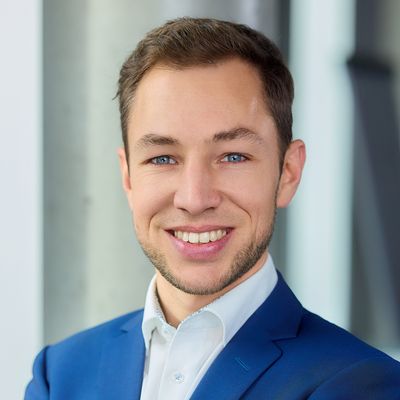
Thomas Gerhardy
KIT
Contact
Institute for Anthropomatics and Robotics
Thomas Gerhardy studied sports science at the German Sports university Cologne and university of Heidelberg. After a position as research consultant at a spin-off company, he completed his doctorate at the university of Heidelberg. His research expertise lies at the intersection of sports science and psychology, with a focus on innovative approaches to studying human movement and behavior.
After his defense, he was working at the Institute of Computer Engineering at the University of Heidelberg. On his project he focused on mobility in older adults to improve assistive devices for older adults. Since March 2025 he has been co-leading the graduate school HIDSS4Health for KIT related concerns.
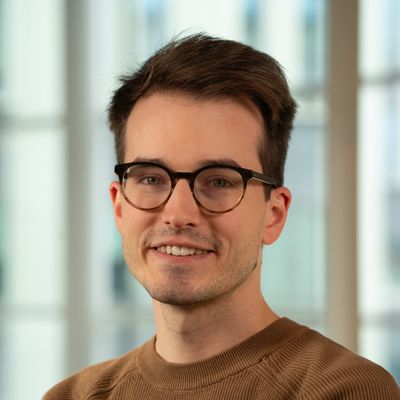
Balint Kovacs
DKFZ
Contact
Division of Medical Image Computing
Scientific Partners: